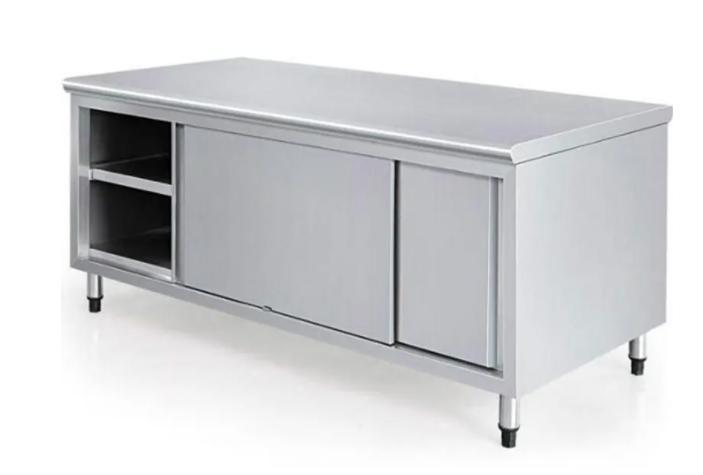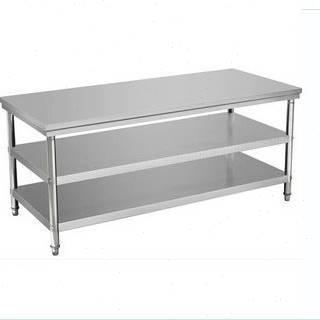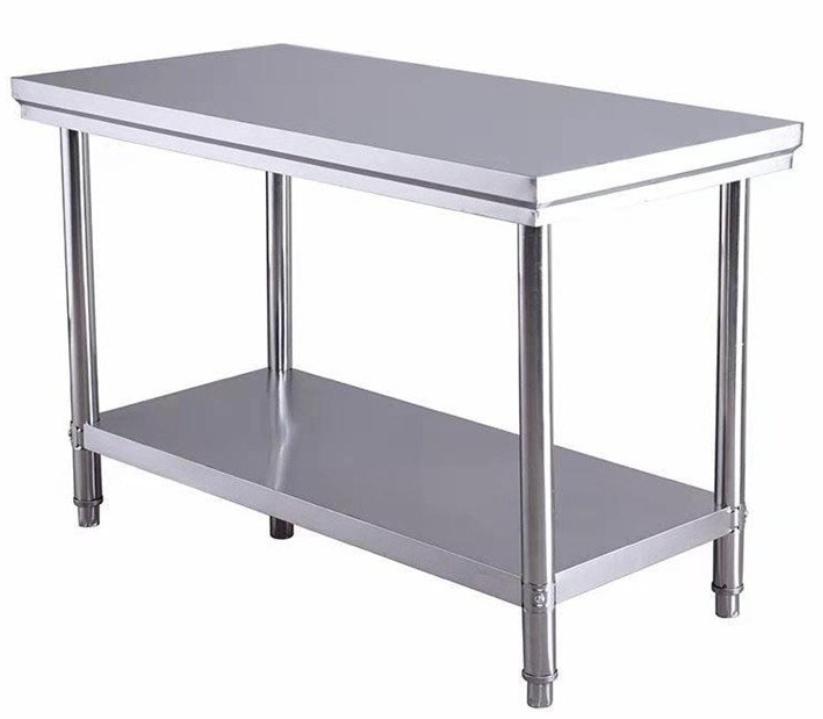
For open storage below the worktop, choose our two-tier table. Choose the three-tier version when additional open shelving is useful, or the sliding-door version when stored items should be enclosed. The current catalogue lists 1200, 1500 and 1800 mm lengths at 800 mm depth and height for the principal worktable configurations. If a machine will sit on the top, check its weight and footprint against the exact table structure before ordering.
Which standard worktable fits the job?
| Buying need | Start with | Check before ordering |
|---|---|---|
| Open lower storage and easy access | Two-tier worktable | Top size, shelf clearance and load location |
| More open shelf space | Three-tier worktable | Height between shelves and usable access |
| Enclosed storage under the top | Sliding-door worktable | Door opening and cleaning access |
These are configuration choices, not a ranking of strength. Extra shelves do not automatically increase worktop capacity.
How much weight can the selected table hold?
We do not publish one load number across all worktable sizes and structures. A concentrated machine load and evenly distributed stock are different cases, and a shelf can have a different limit from the top. Send the intended equipment or stock weight, its footprint, where it will sit and whether it is moved in use. We can then assess the selected table and state the applicable rating or a required structural change in the quotation.
Do not use steel grade or sheet thickness alone as a load rating. Support rails, welds, span and installation conditions also matter.
Choose a configuration before choosing a size
Our two-tier worktable provides an open lower shelf. The three-tier worktable adds another shelf, while the sliding-door version keeps stored items enclosed. More shelves do not automatically mean greater top capacity. Compare the working surface, storage access and cleaning needs separately.
The current catalogue lists 1200, 1500 and 1800 mm lengths for the principal worktable configurations. Check each product page for its listed length × depth × height; these are catalogue references, not an approved installation drawing.
Which dimensions should the RFQ include?
Measure the available floor footprint, door openings and working aisle. State overall length × depth × height in millimetres, plus any required backsplash, shelf clearance or access around adjacent appliances. If the table must support a machine, send its dimensions, footprint and weight rather than only the table length.
For a standard wholesale order, give the product configuration, selected catalogue size, quantity and destination. If you require a change to the standard structure, ask for a separate specification and quotation; do not assume a catalogue photograph defines the modified product.
What should the supplier confirm in writing?
- Worktop and shelf material and thickness, identified by component
- Overall dimensions and any dimensional tolerance
- Top and shelf load ratings, each with test conditions if required
- Frame and foot or castor arrangement
- Packing dimensions, quantity and delivery scope
These details allow a buyer to compare like with like. If a load rating or test record is unavailable, treat the rating as unverified rather than filling in a typical industry number.
Turn the guide into a product list.
Select standard sizes and quantities, then tell us your destination and shipping arrangement.